The city that made chaos function
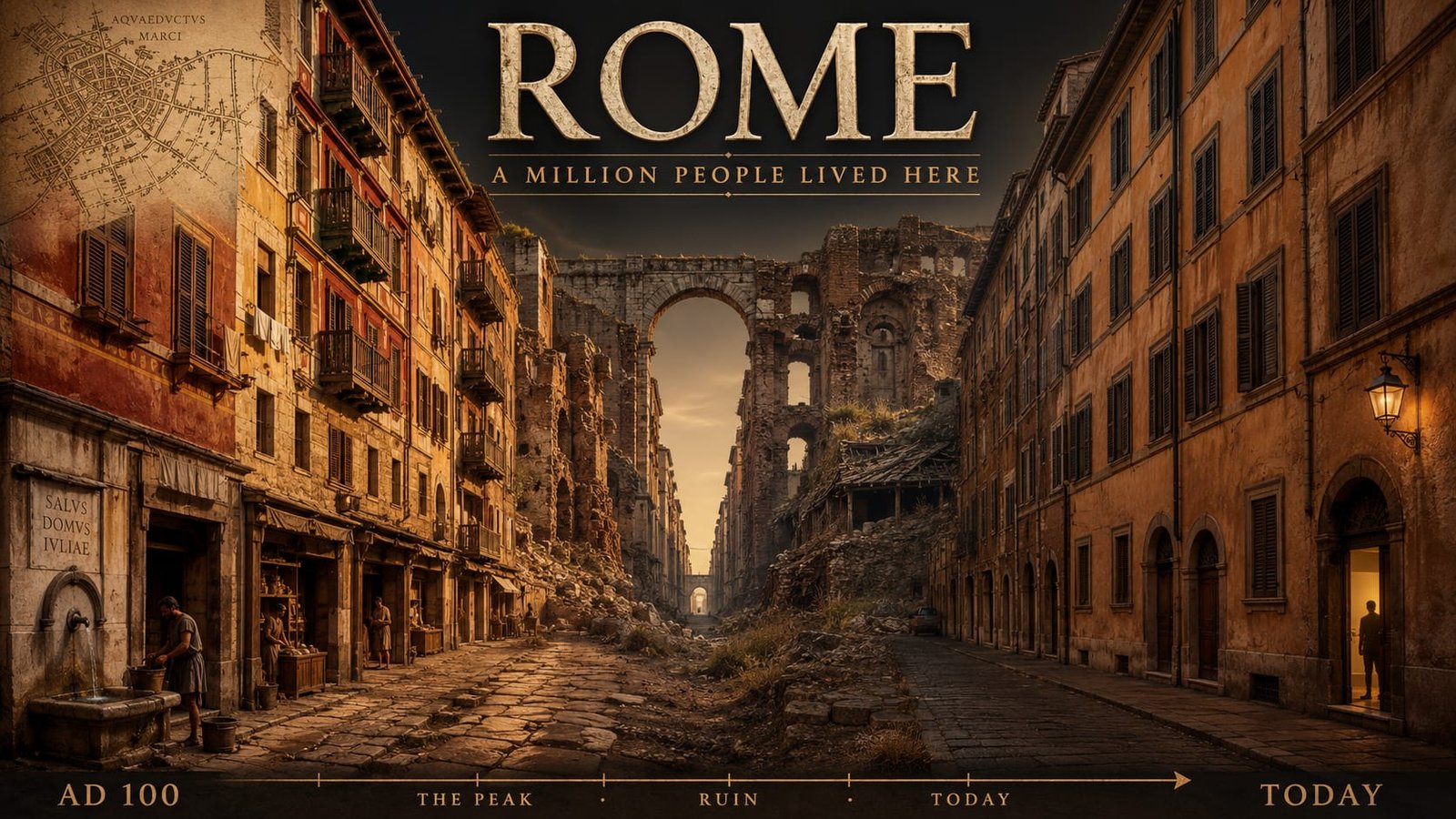
Rome around AD 100 held something close to a million people. No European city would reach that number again until London in the nineteenth century, and London had steam, iron, a police force and a modern state to do it with.
Rome had none of those. What it had was a set of systems that each solved one problem well enough, and an administration whose real achievement was keeping all of them from failing on the same day.
That is the honest frame for the city. Not a marble ideal — a very large machine running near its limits.
The problem of movement
The most revealing rule in Rome is about carts.
Wheeled vehicles were largely barred from the streets during daylight hours. In a city this dense, with streets this narrow, daytime carts would have produced permanent gridlock. So deliveries — building materials, food, everything heavy — happened at night.
Which means the daytime order that Roman writers describe was paid for with nocturnal noise loud enough that complaining about it became a literary genre. Sleep was the cost of a functioning city, and it was distributed unevenly: the rich had thick walls and courtyards set back from the street.
Water, aqueducts, and Frontinus
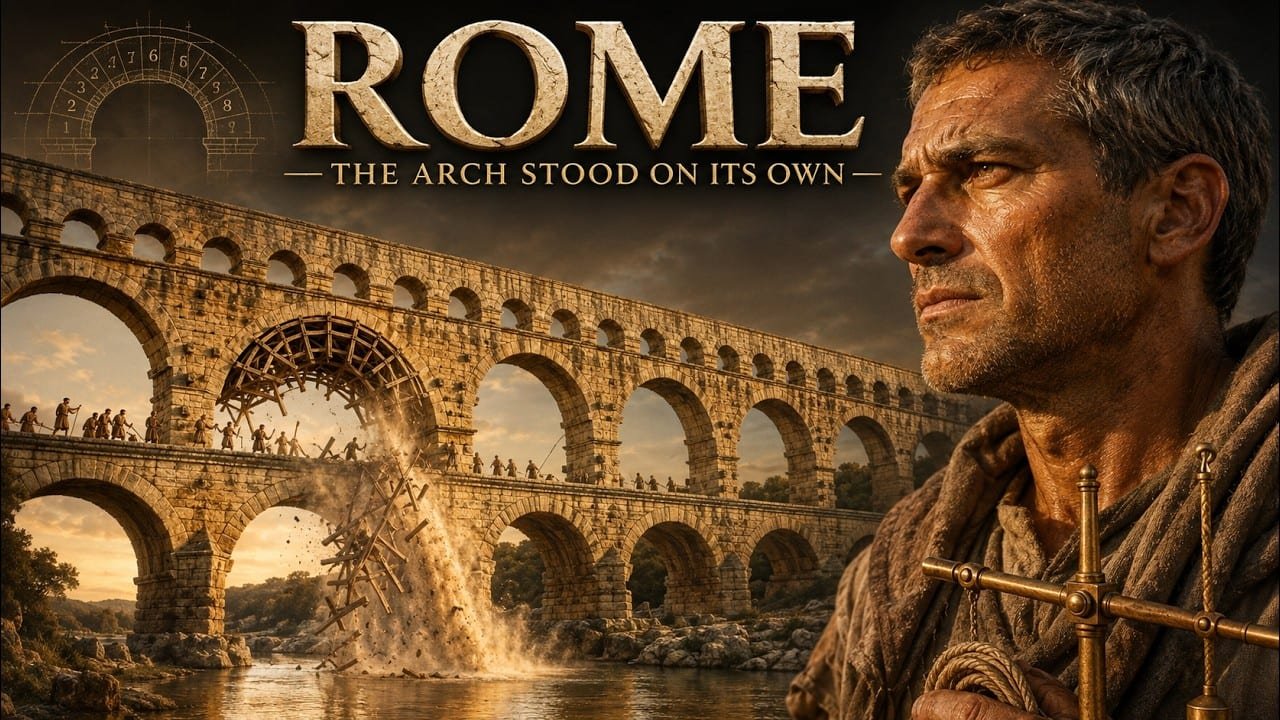
Nine aqueducts served Rome by AD 100. They moved water from sources tens of kilometres away using nothing but a carefully maintained gradient — no pumps, no motors, no moving parts of any kind in the transport system.
The consequence is easy to miss: the water could not be turned off. It arrived continuously, day and night, and had to go somewhere. So the system was designed around constant flow. Distribution towers fed public fountains, which ran permanently; overflow fed the baths; the baths fed the drains; the drains flushed the sewers.
We know how this was administered because Sextus Julius Frontinus was appointed water commissioner in AD 97 and wrote about it. His account is not a monument or a panegyric. It is an operations report — capacities, illegal taps, maintenance, fraud by contractors — and that is precisely why it is valuable.
The truth about “clean”
Rome’s sanitation gets over-praised. The Cloaca Maxima and the sewer network were genuinely impressive engineering, and they were built to drain the valleys and carry away the constant aqueduct overflow, not to serve every household.
Most people did not have a private connection. Waste from upper floors of apartment blocks was handled by whatever means were to hand, and the results were exactly as unpleasant as that implies. Public latrines existed and were communal in a way modern visitors find startling.
The correct description is a city with excellent water supply, good drainage in the places that had been engineered, and everyday sanitation that varied enormously by wealth and altitude.
Insulae — ordinary Rome
The buildings most Romans lived in were insulae: apartment blocks, commonly six or seven storeys.
They were stratified vertically, and the stratification runs opposite to the modern instinct. The best accommodation was low down. Ground and first floors had space, solid construction, and access to piped water where it existed. Rents fell as you climbed, because everything else fell too: the upper storeys were more lightly built, more prone to fire, harder to escape from, and had no water at all — every drop was carried up by hand.
Collapse and fire were both common enough to be regulated. Height limits were imposed more than once, which tells you they were being exceeded.
Why Rome still matters
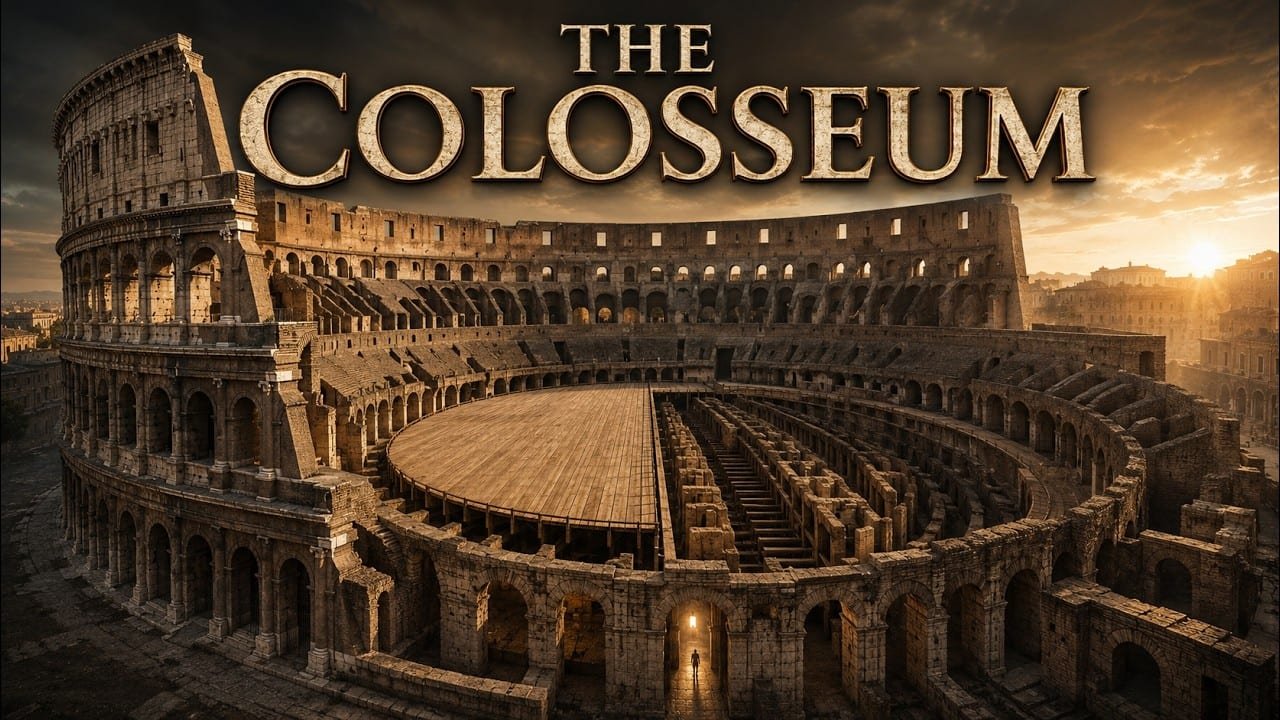
The interesting thing about Rome in AD 100 is not any single structure. It is the interdependence: grain arriving through Ostia on schedule, water arriving on gradient, crowds being sorted into the Colosseum and back out again, carts moving at night so that people could move by day.
Remove any one of those and the others degrade quickly. The city was not stable because it was well built. It was stable because it was actively, continuously run.