The problem was Nero
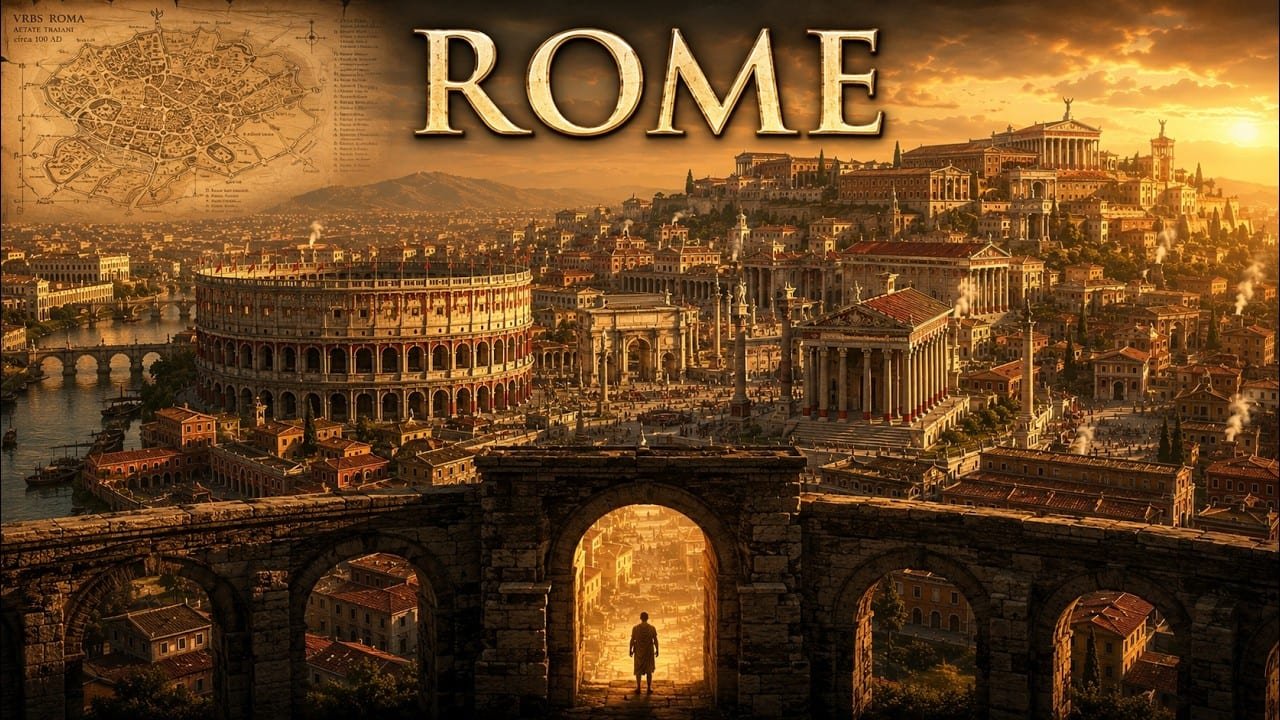
After the fire of AD 64, Nero took a large piece of central Rome and built himself a palace on it — the Domus Aurea — with landscaped grounds and an artificial lake at the middle.
That lake is the key to the building. When the Flavian dynasty took power after Nero’s fall, they needed to demonstrate that the city belonged to the Roman people again rather than to one man’s estate. They drained the lake and put a public amphitheatre on the site.
The gesture is legible in the choice of ground alone: the most private space in Rome, converted into the most public one. Everything else about the building follows from that decision.
A diagram of Roman society
The Colosseum’s real engineering problem was not the stone. It was the people.
Fifty thousand of them had to arrive, be seated, watch, and leave without becoming a crowd in the dangerous sense. The answer was eighty entrances, numbered, feeding a system of stairs and vaulted passages that delivered each ticket-holder to a specific tier.
The tiers were the social order made vertical. Senators at the bottom, closest to the arena; then equestrians, then citizens, then — highest, furthest, and worst — women and the poor. Where you sat was not a preference, it was a statement of rank, and everyone in the building could read it at a glance.
The design does two things at once, and it does them with the same masonry: it moves an enormous crowd efficiently, and it tells that crowd exactly what it is.
The velarium and the hypogeum
Two systems make the Colosseum an unusual piece of engineering rather than simply a large one.
The velarium was a retractable awning that could be drawn over the seating to shade it. It was worked with ropes and masts set around the top of the outer wall; the sockets that held those masts are still visible in the surviving stonework. The rigging was reportedly handled by sailors, which is the sort of detail that tells you how the Romans thought about the problem — it is a sail, so you fetch people who work sails.
The hypogeum is the other. Beneath the arena floor sits a two-level basement of corridors, animal cages, lifts and trapdoors, added under Domitian after the building opened. It is the machinery of the spectacle: things and animals appeared from below, on cue, apparently from nowhere.
Once you have seen the hypogeum, the arena floor stops reading as a floor and starts reading as a stage deck.
Gladiators, cruelty, and myth
The popular picture — every fight to the death, thumbs down, constant slaughter — is wrong, and the reason it is wrong is economic.
A trained gladiator represented a serious investment: purchase, years of feeding, housing and specialist training. Their owners hired them out. Killing your capital asset at every performance is not a business, and the evidence of career records and repeat appearances shows that it was not what happened.
That correction is not a defence of the institution. What was actually going on — an industry built on enslaved and condemned people, staged as public entertainment, with executions scheduled between the bouts as a lesser attraction — is more disturbing than the myth, not less. The myth at least has the decency to be lurid. The reality was routine.
What the Colosseum really was
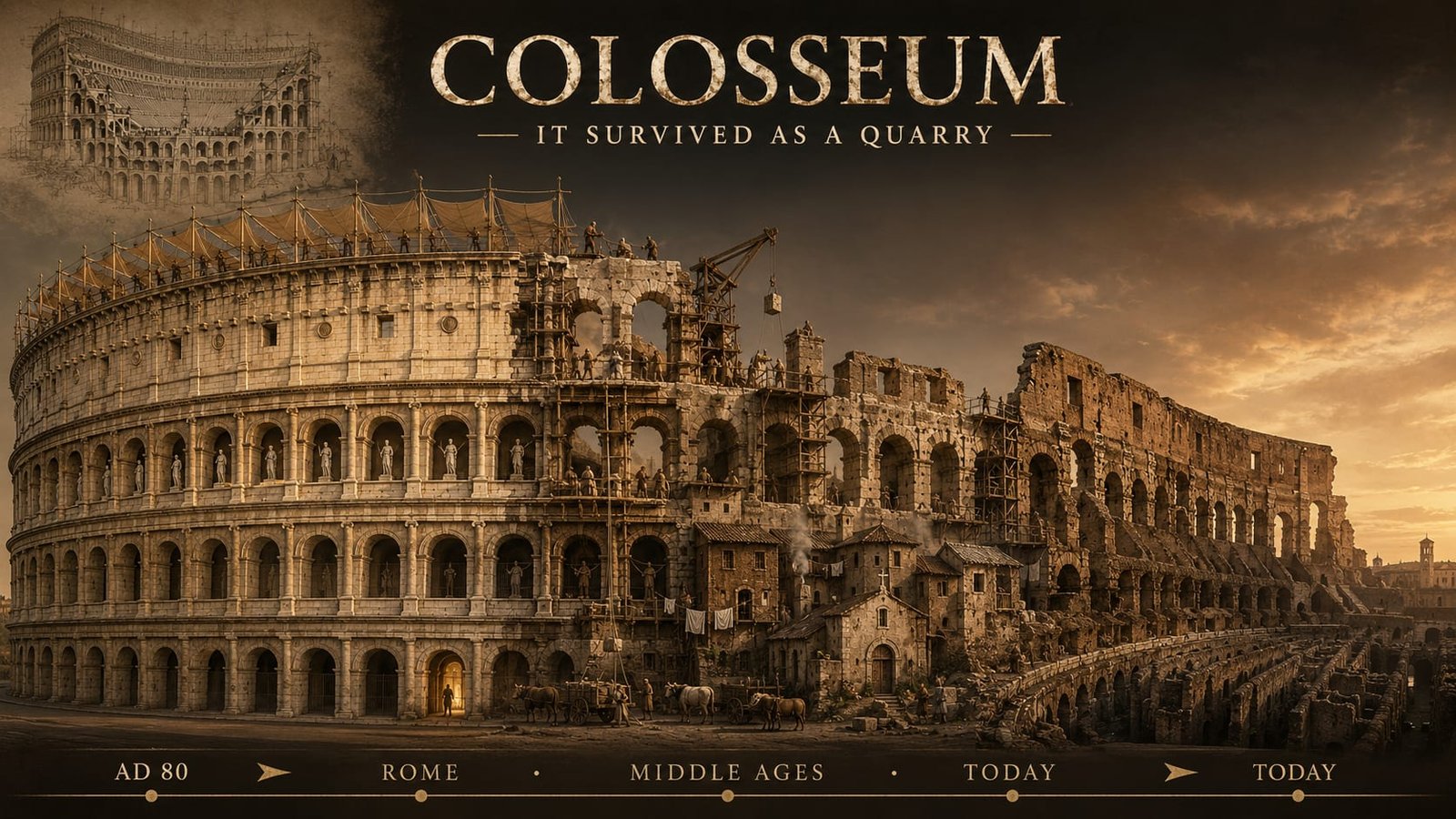
The building’s later career is as revealing as its first. Once the games ended it became, in turn, housing, workshops, a fortress and a quarry. A great deal of its travertine was carted away for other Roman construction, which is why the outer ring survives on one side and is missing on the other.
What we visit is therefore not a ruin in the sense of something that fell down. It is a structure that was systematically taken apart for parts, and stopped being taken apart only when attitudes changed.